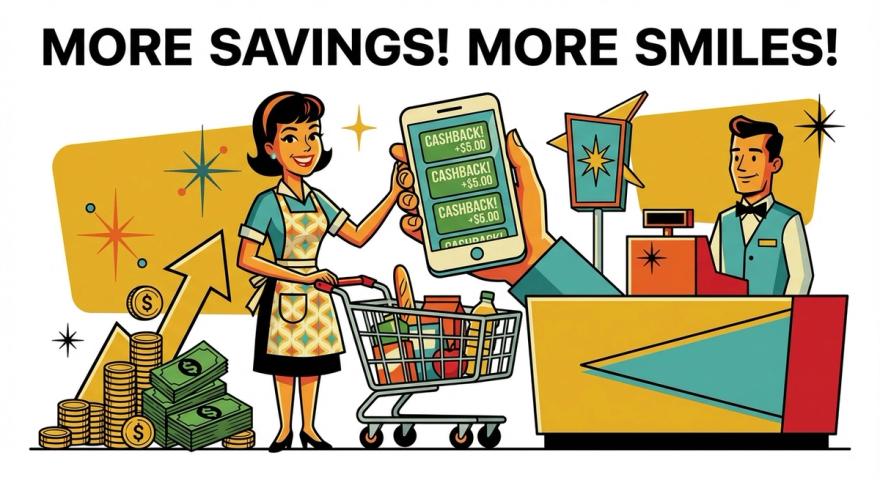

If you want to know how to maximize cashback, the answer isn't just "use more apps" — it's about layering the right apps in the right order. A smart stacking strategy can turn a $50 grocery run into a $5–$10 savings event without much extra effort.
Key Takeaways
- Cashback stacking means combining multiple savings methods — sales, coupons, rebate apps, browser extensions, and rewards credit cards — on the same purchase
- Ibotta and Fetch can be used together on the same grocery receipt for double rewards
- Rakuten and Honey (PayPal Honey) can both be active during online checkout, but you need to know which one to trigger first
- Adding a rewards credit card as the final layer can add 1.5%–5% back on top of everything else
- A single stacked grocery trip can realistically save $8–$15 on a $50 basket
What Does It Mean to Stack Cashback Apps?
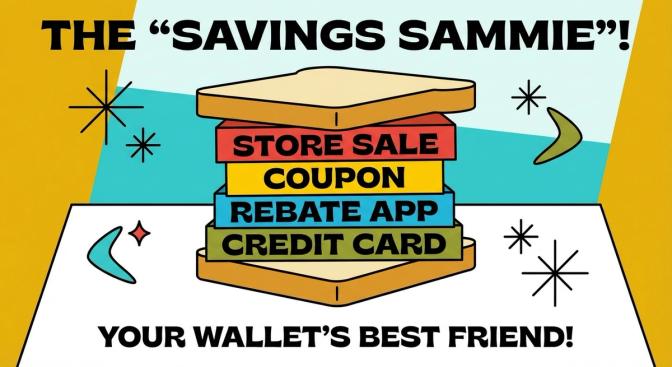
Cashback app stacking means using more than one savings method on the same purchase at the same time. Instead of earning cash back from just one source, you layer several on top of each other — and they all pay out independently.
Think of it like a savings sandwich. The store sale is the bread, and every coupon, rebate app, browser extension, and credit card reward you add is another layer of filling. Each layer is independent, and most don't cancel each other out.
The key insight most people miss: these apps don't know about each other. They each track your savings through their own systems, so stacking them is completely allowed and surprisingly simple once you know the order.
How App Stacking Works Step by Step
Here's the layering framework we recommend at RewardsAppGuy:
- Start with a store sale or weekly deal — check your grocery store's app or weekly circular first
- Apply a manufacturer or store coupon — paper, digital, or clipped in your store's app
- Activate a rebate app offer — unlock the offer in Ibotta, Checkout 51, or similar before shopping
- Scan your receipt — submit to Fetch or Receipt Hog after checkout
- Use a cashback browser extension — activate Rakuten or Honey for online purchases
- Pay with a rewards credit card — earn 1.5%–5% back on top of everything else
Follow this order and you're stacking up to six separate savings streams on one purchase.
The Best Cashback Apps to Stack Together
Not every app combination works perfectly. Some overlap on the same offer type, and a few stores restrict coupon stacking. Here's what we've actually tested and found to work.
Stacking Ibotta and Fetch on Groceries
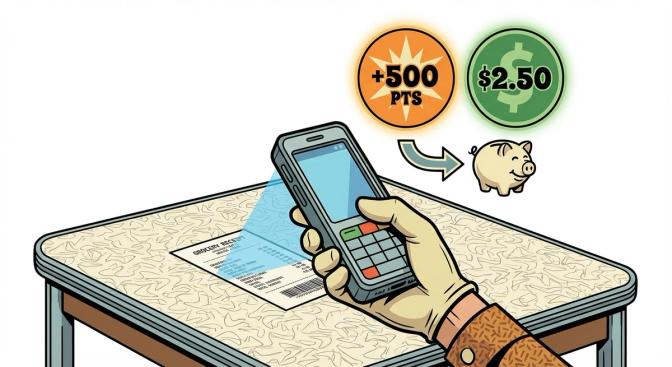
Ibotta gives you cash back on specific products — think $0.50 off Chobani yogurt or $1.00 off a box of Tide Pods. You unlock the offer before shopping, then verify your purchase by scanning your receipt or linking your store loyalty card.
Fetch works differently. It gives you points for scanning any receipt, regardless of what you bought. You earn bonus points for specific brands, but the base points apply to every receipt.
Because they use completely different tracking methods, you can submit the same receipt to both apps. On a $50 grocery run with five Ibotta offers, you might earn $3.50 in Ibotta cash back plus 1,500–2,000 Fetch points (worth roughly $1.50–$2.00 in gift cards). That's $5–$5.50 from just two apps on one receipt.
Stacking Rakuten and Honey for Online Shopping
Rakuten pays a percentage cash back — often 1%–15% — when you shop at partner stores through their portal or browser extension. Honey (now PayPal Honey) automatically tests coupon codes at checkout and can also apply Honey Gold rewards points.
These two can technically be active at the same time, but there's an important rule: only one cashback portal can get credit for a purchase. If both extensions are active, the one that fires last usually gets the commission — and you may lose your Rakuten cash back entirely.
The safest approach: disable Honey's cashback feature and use it only for coupon code testing. Let Rakuten handle the cash back. You get the coupon savings from Honey and the percentage back from Rakuten on the discounted price.
Adding Dosh or Upside for Automatic Savings
Dosh links directly to your credit or debit card and pays cash back automatically at participating restaurants, hotels, and some retailers — no receipt scanning needed. Upside works similarly for gas stations and some grocery stores, offering 10–25 cents per gallon back on fuel.
Neither of these conflicts with Ibotta, Fetch, or a rewards credit card. You can fill up at an Upside station, pay with your Chase Sapphire card for 3x points, and earn Upside cash back simultaneously. That's two independent rewards on one gas purchase.
How to Maximize Cashback In-Store
In-store stacking takes a little more planning than online shopping, but the savings can be just as impressive — especially on groceries.
Layer Store Sales, Coupons, and Rebate Apps
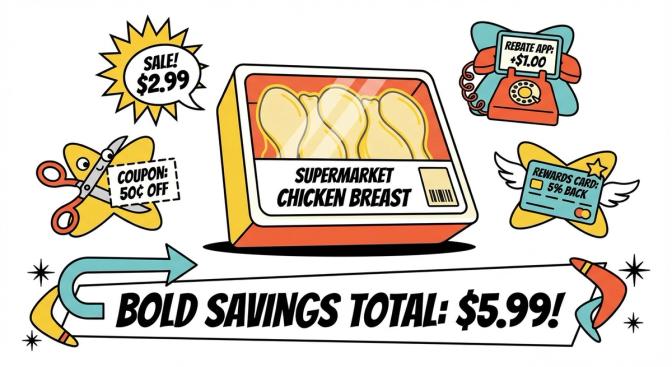
Here's a real-world example. Say Kroger has chicken breast on sale for $3.99/lb (regularly $5.99/lb). You have a digital coupon in the Kroger app for $1.00 off. You've also unlocked a $0.75 Ibotta offer for that brand.
Your savings breakdown:
- Store sale: $2.00/lb saved
- Digital coupon: $1.00 off
- Ibotta rebate: $0.75 back
- Fetch receipt scan: ~50 bonus points ($0.05–$0.10 value)
- Rewards credit card (2% back): ~$0.18 on a $9 purchase
Total saved on one item: roughly $3.93–$4.03 on a product that started at $5.99/lb. That's a 65%+ discount through layering alone.
Using Shopkick Alongside Other Apps
Shopkick earns you "kicks" just for walking into participating stores and scanning product barcodes on the shelf — no purchase required. You can earn kicks at Target or Walmart, then buy those same products using Ibotta offers and pay with a rewards card.
Shopkick doesn't interfere with any receipt-based app because it operates on a completely separate system (location and barcode scans). It's genuinely additive — free points just for being in the store.
How to Maximize Cashback Online
Online stacking is often easier than in-store because browser extensions do most of the work automatically.
Browser Extensions That Work Together
Capital One Shopping and Honey both test coupon codes automatically, but they also both offer their own rewards programs. Running two coupon-testing extensions simultaneously can cause conflicts — one may override the other's coupon application.
Our recommended setup: install Rakuten for cash back and Capital One Shopping for coupon codes and price comparisons. This pairing tends to have fewer conflicts than mixing Rakuten with Honey, and Capital One Shopping's price comparison tool adds extra value.
Capital One Shopping vs. Honey — Can You Use Both?
Yes, but with caution. Capital One Shopping focuses on price comparison and automatic coupons. Honey (PayPal Honey) also tests coupons and adds Honey Gold points. If both are active, they may compete to apply coupon codes, and one could override the other.
The practical solution: keep both installed but only activate one at checkout. Use Capital One Shopping as your default — it has a stronger price history tracker. Switch to Honey if you're specifically trying to earn PayPal Honey Gold points at a store where Rakuten isn't a partner.
Add a Rewards Credit Card as the Final Layer
A rewards credit card is the most consistent layer in your stack because it applies to every purchase automatically. You don't need to activate offers or scan receipts.
For groceries, a card like the Blue Cash Preferred from American Express earns 6% back at U.S. supermarkets (on up to $6,000/year). On a $200 monthly grocery budget, that's $12/month or $144/year just from your credit card — on top of everything else you're stacking.
For online shopping, cards with 3%–5% back on general purchases or specific categories (like the Chase Freedom Flex's rotating 5% categories) compound your Rakuten or Ibotta earnings significantly.
Always pay your balance in full each month. Carrying a balance will cost you far more in interest than you'll ever earn in rewards.
Common Stacking Mistakes to Avoid
- Activating Ibotta offers after checkout — offers must be unlocked before you shop or they won't count
- Running Rakuten and Honey cashback simultaneously — you risk losing the Rakuten commission entirely
- Forgetting to submit receipts — Fetch and Receipt Hog only pay if you actually scan within the app's time limit (usually 14 days)
- Using a debit card instead of a rewards credit card — you're leaving the most consistent layer of savings on the table
- Ignoring store loyalty programs — most stack seamlessly with rebate apps and are free to join
How Much Can You Actually Save by Stacking?
Let's put it all together with a realistic $100 online shopping scenario at a major retailer like Target.
| Savings Layer | Method | Estimated Savings |
|---|---|---|
| Sale price | 20% off sale | $20.00 |
| Coupon code (via Capital One Shopping) | 10% off code | $8.00 |
| Rakuten cash back (5% at Target) | Portal cash back | $3.60 |
| Fetch receipt scan | Points on receipt | $0.50 |
| Rewards credit card (2% back) | Card rewards | $1.37 |
| Total saved | $33.47 |
That's 33% back on a $100 purchase using five independent savings layers. On a $200 grocery run with a strong Ibotta week, stacked savings of $20–$30 are achievable.
The math compounds quickly. If you spend $300/month on groceries and $200/month online, a consistent stacking habit could realistically save you $600–$1,200 per year — with no change to what you actually buy.
Frequently Asked Questions
Frequently Asked Questions
Can you use multiple cashback apps on the same purchase?▾
Yes, you can use multiple cashback apps on the same purchase — this is called cashback stacking. Apps like Ibotta and Fetch use different tracking systems, so they each pay out independently on the same receipt without canceling each other out.
How to maximize cashback on groceries?▾
To maximize cashback on groceries, layer multiple savings methods in order: start with a store sale, apply a coupon, activate an Ibotta offer, then scan your receipt in Fetch. Adding a rewards credit card as the final layer can add another 1.5%–5% back on top of your app earnings.
Does stacking cashback apps actually work, or do the apps block it?▾
Cashback app stacking genuinely works because most apps track purchases through separate systems and have no visibility into each other. Ibotta and Fetch, for example, can both be used on the same grocery receipt with no restrictions from either app.
Can you stack cashback apps with credit card rewards?▾
Yes, paying with a rewards credit card is one of the best final layers to add when stacking cashback apps. Your credit card earns 1.5%–5% back on the total purchase amount independently of whatever the cashback apps pay out.
How much extra money can you save by stacking cashback apps?▾
A well-stacked grocery run can realistically save $8–$15 on a $50 basket. For example, combining Ibotta and Fetch alone on a single receipt can earn $5–$5.50 before factoring in coupons or credit card rewards.
Can you use Rakuten and Honey at the same time?▾
Rakuten and Honey can both be installed at the same time, but only one cashback portal can receive credit for an online purchase. To avoid losing your Rakuten cash back, disable Honey's cashback feature and let Rakuten track the transaction.